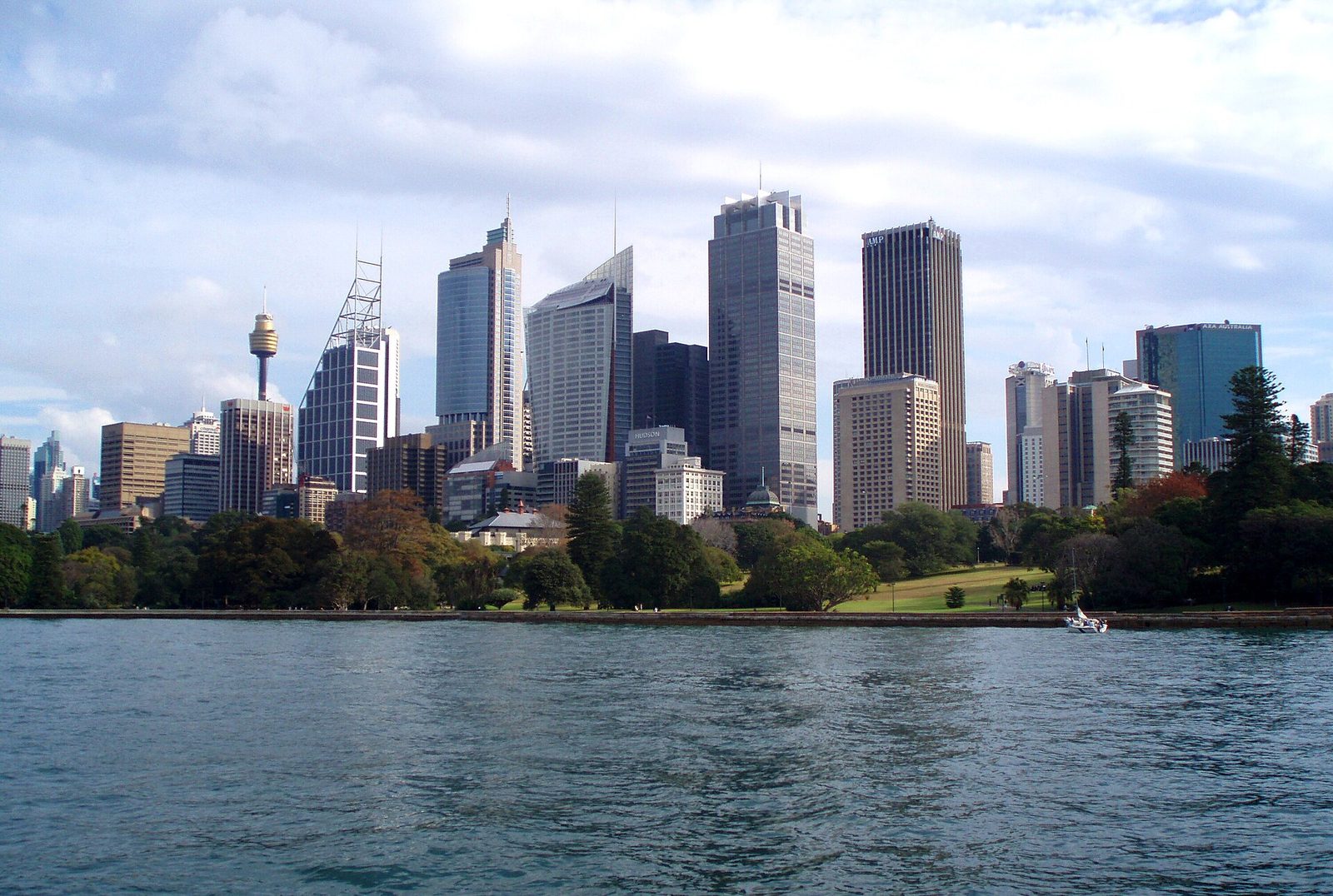
There are years the country uses as a ruler. Black Summer — the fires that ran from the last months of 2019 into March 2020 — is one of those years. People who were not in a fireground still remember the light. Sydney's harbour went orange. Canberra's air became a household fact. Melbourne tasted smoke that had travelled. On the south coast of New South Wales, in East Gippsland, on Kangaroo Island and in the Adelaide Hills, the ruler was not metaphorical. It was a night, a road closed, a town that woke to a different silhouette.
The numbers are public and grim enough: tens of millions of hectares in the broader season, thirty-three lives lost in the fires themselves, a wildlife toll estimated in the billions of animals. The question that remains is ecological and civic at once. When does the green mean recovery, and when does it mean a different place wearing a familiar name?
A season that became a reference point
Black Summer had a long preface. Drought that had already emptied farm dams. Forests that had been dry enough, for long enough, that the usual moisture buffers failed. A fire weather index that spent weeks in the part of the scale that used to be rare. Once a fire is large enough, the ignition story becomes less useful than the landscape story. The Gospers Mountain fire made its own weather. Night-time humidity, which used to give firefighters a few hours of manners, often did not arrive.
The season is a reference point because it moved the edge of what agencies, ecologists and households treat as plausible. Plans written for a bad January were asked to cover a bad six months. Rainforests that were not supposed to carry crown fire carried it. Alpine ash stands that rely on a long interval between lethal fires were burned in places that had not forgotten the last one. The scientific papers since have been a literature of exceptions that stopped being exceptional. Recovery is still being argued on the ground: a visitor calls a slope hopeful, a botanist points to a missing midstorey, a grazier points to weeds that arrived with the first vehicles. All of them can be right.
How a eucalypt answers fire
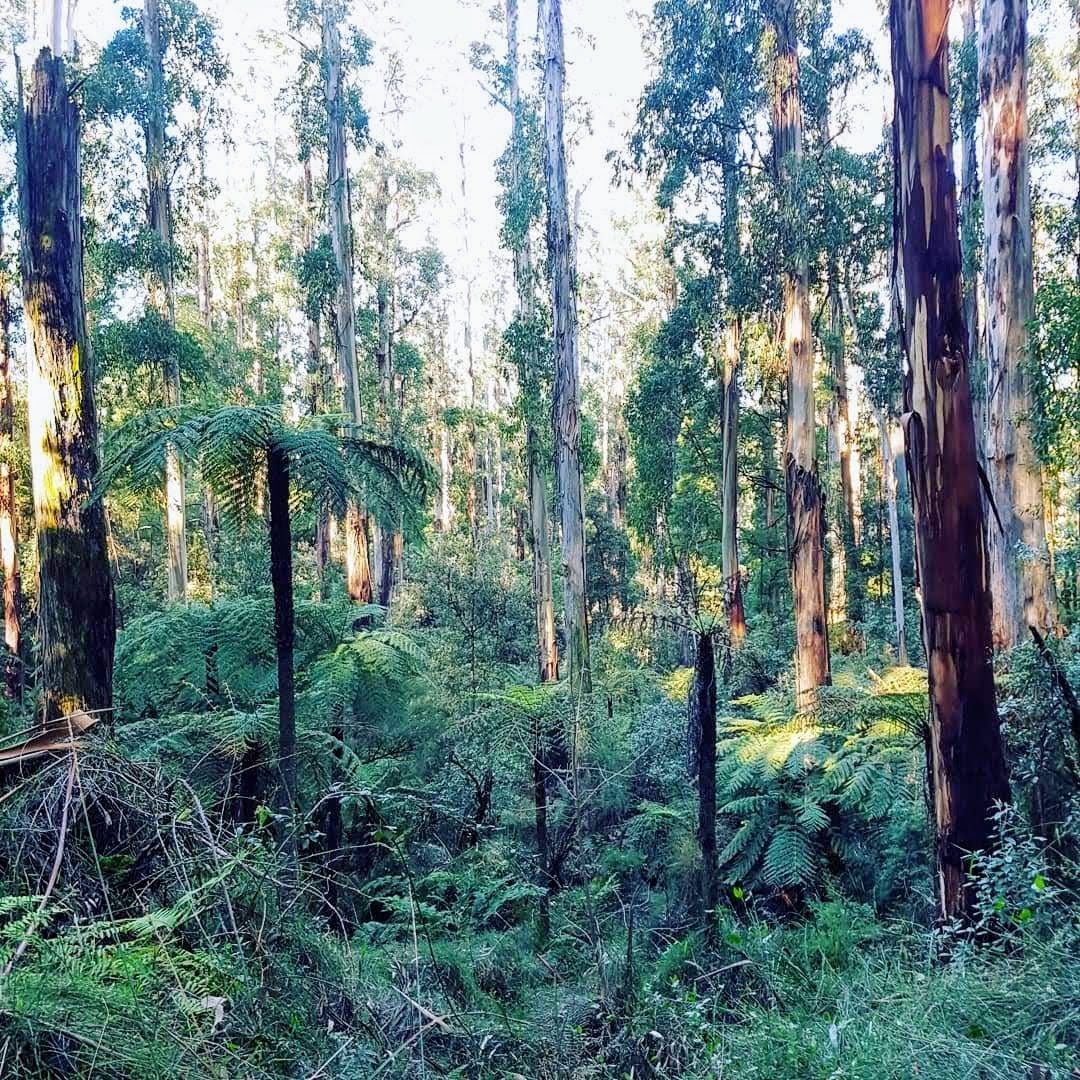
Stand in a burnt stringybark country a few months after a hard fire and you will see the answer most Australians now recognise: a fur of bright leaves along the trunks, as if the tree had grown a second, vertical crown. Those are epicormic shoots. Many eucalypts keep dormant buds under the bark, insulated, waiting. When the crown is scorched or consumed, the buds break. The tree photosynthesises again. It looks, from a distance, like defiance.
It is defiance with a cost. The tree has spent reserves. The hollow that a possum used may have gone. The flowering schedule is wrong for a year or three. The forest is a gallery of green sticks before it is a forest again. Epicormic recovery is why so much of the south-east did not become a charcoal monument. It is not a promise that the animal community, or the next fire interval, will be as they were. Some species answer lower down, from a lignotuber at the base. Mallee eucalypts have made a landscape out of that habit. Thickets are not always the understorey you had. They are the understorey the fire permitted.
Cool fire, and the older practice of putting fire on Country without taking the crown, sits in cultural burning and the return of cool fire. Black Summer was not that fire.
Seedbanks and the species that gamble
Not every plant keeps a spare self in the bark. Some keep it in the soil, or in woody capsules that open in heat. Banksias, hakeas, many wattles, a long list of legumes: their bet is that a fire will be hot enough, and rare enough, to make a seedbed and then leave the seedlings alone for a decade or several. The soil seedbank is a library read in disaster. After Black Summer the reading was nationwide. Wattles came up in carpets.
The gamble fails when the interval is wrong. If the next lethal fire arrives before the new plants have set their own seed, the library has been checked out and not returned. Mountain ash and alpine ash — the tall wet forests of Victoria and southern New South Wales — are the famous case. They are killed by a crown fire and rely on a seed crop in the canopy. A stand burned twice in twenty years can become a wattle thicket or a grassy slope with a memory of forest. That conversion had already been documented after earlier fires. Black Summer added new stands to the worry list, and a climate that is shortening the safe interval.
Rainforest in the Gondwana remnants of the McPherson and Border Ranges, and pockets further south, was not supposed to be on that list. Fire entered anyway, in a drought deep enough to make the unburnable burnable. Recovery there is slower, shadier, less theatrical than a eucalypt's epicormic coat. Some gullies will return. Some edges will not. A rainforest that has become a sclerophyll fringe is a change of country, not a pause.
When a forest does not come back
The sentence people want is: the bush always comes back. The sentence a fire ecologist will give you, if they are allowed to be dull, is: some of it does, some of it comes back as something else, and some of it waits for an interval we may no longer have. Alpine peat, once burned, can keep burning in the ground and then fail to be peat again. A hollow-bearing tree that took two centuries to become useful to a cockatoo is not replaced by a thicket of saplings. A koala colony that lost its feed trees in a single night is not restored by a green flush on trunks. Habitat for that animal is a longer story, and it includes the unfashionable suburban edge; we take the corridor question up in koala habitat and backyard corridors.
Weeds read a fire as an invitation. Fleabane, crofton weed, the grasses that love light and disturbance, the garden escapees that were waiting in the creek: they arrive with the first rain and with the first load of fill. Recovery that is only measured as green cover can be a recovery of the wrong country. This is why the years after a megafire are a weeding problem as much as a planting one. Hope is not a land-management plan. Forests that may not return deserve an honest map, not a tourism slogan.
Smoke in the towns
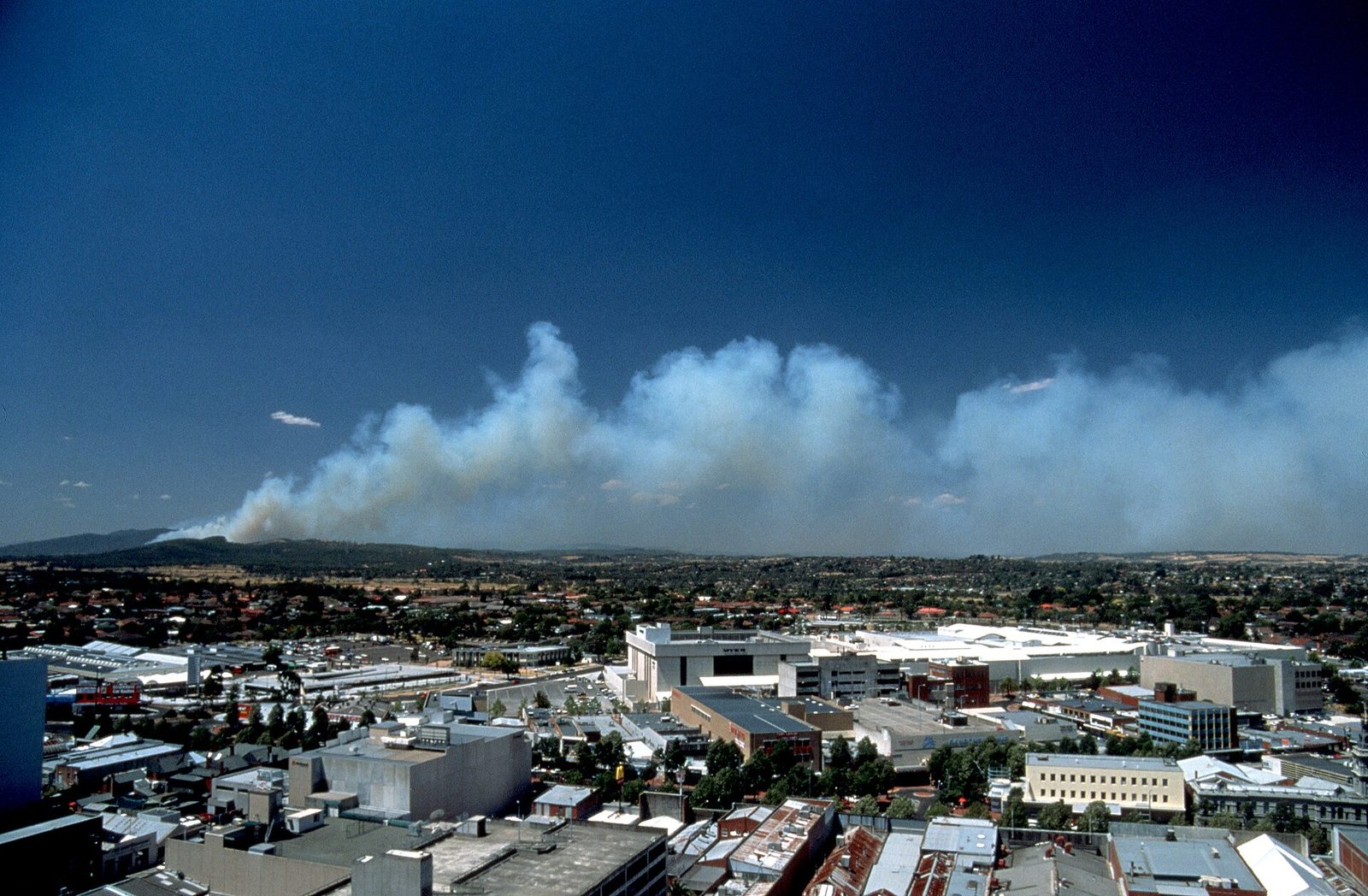
Black Summer made smoke a metropolitan subject. For weeks, outdoor sport was a negotiation. Laundry smelled of the ranges. People with existing breathing trouble — and this journal will not prescribe, only notice — already knew what to do with a bad air day; millions of others learned the language of PM2.5 as if it had always been on the fridge. Indoor air, closed windows, the cheap theatre of a paper mask on a smoky afternoon: these became household tactics. The medical advice belongs to clinicians. The civic fact belongs here. A fire two hundred kilometres away is a town's weather. Capitals that treat fire as a regional spectacle will be educated, sooner or later, by the wind.
The useful town habit after Black Summer is not a permanent anxiety. It is a summer kit that includes more than a hose: a way to hear warnings, a room that can be closed, an understanding that “the fire is not near us” is not the same sentence as “the air is fine”. Houses and heat are a neighbouring problem; they live on the same Fire Season shelf.
After, which is still now
Years on, the ruler is still on the table. Some slopes are a young forest. Some ridges are a standing dead, softening. Inquiries produced recommendations that have been implemented, half-implemented, and quietly parked. Black Summer is not a closed ecological event. It is a reference climate. The next large season will be told in relation to it. Our part is to stop confusing a green trunk with a finished recovery, and to treat the interval itself as the scarce thing. Forests can be patient. Seasons, lately, are less so.