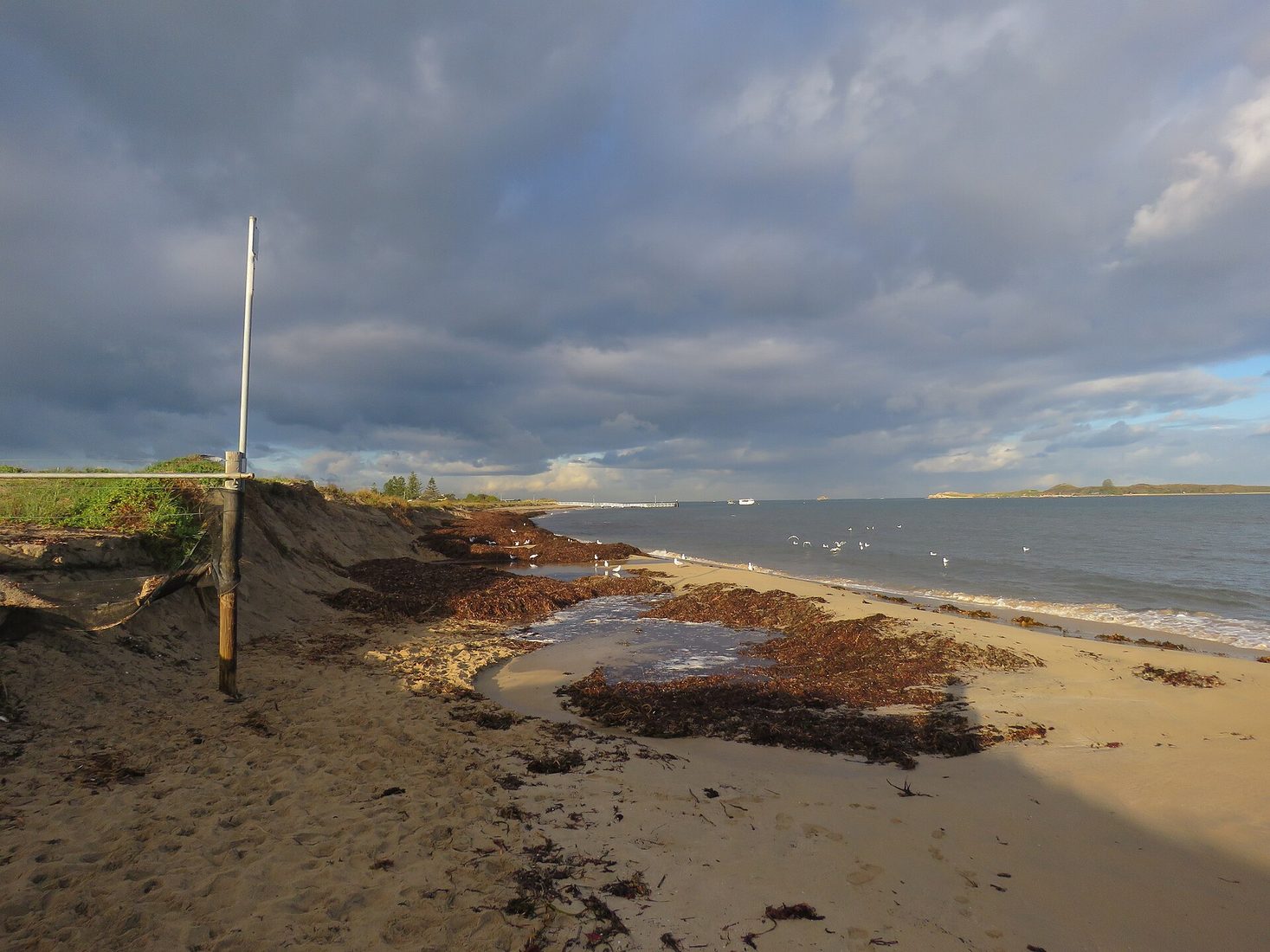
The sea is not a stakeholder. It does not attend the consultation, it does not read the overlay, and it is not impressed that a fibro shack became a glass box with a price that assumed the dune would hold. What it does, on an ordinary year, is rearrange sand. What it does on a year of king tides, a hard easterly swell, and a storm that sits off the coast for three days, is rearrange the argument. A scar in a tourist cliff and a scar under a row of houses are not the same event. One is geology with a car park. The other is policy, delayed until the insurance letter arrives.
Australia's inhabited edge is long and densely loved. The Twelve Apostles lose another stack and the country treats it as a postcard updating itself. A street in Collaroy, a canal estate on the Gold Coast, a shack line on the New South Wales south coast, a Western Australian beach suburb watching its dune walk inland: these are asked to be permanent. They were always temporary. Rising seas do not invent erosion. They shorten the interval between the days that used to feel like exceptions.
Geology is allowed to lose a cliff
The Great Ocean Road cliffs are limestone, weather and a tourist economy that photographs the loss. A stack falls and the site is recabled. Nobody writes a buy-back scheme for a pillar of rock. That is the honest use of the word erosion: a coast doing what coasts do, on a scale that does not require a family to move furniture in the night.
The mistake is to borrow that calm for a subdivision. Rock retreats slowly and in public. Sand retreats, returns, and then, after a cluster of storms, fails to return to the line the cadastral map still treats as real. Dunes are a savings account. We built on the account and expressed surprise at the withdrawal. The Apostles can be a lesson in time. They are a poor lesson in planning. A suburb is a set of titles and a council that will be asked, after the next scar, whether a wall is cheaper than an honest map.
The wall that buys a decade
Seawalls, rock revetments, geotextile bags stacked like a pale spine: these hold a line for a run of years. They also spend the beach. Wave energy that used to climb a slope of sand is reflected; the sand in front is scoured; the next open beach along the drift can thin in sympathy. A protected street and a vanished surf-club beach are often the same project.
That trade can still be the right one for a hospital, a harbour, a sewer that cannot move this decade. The dishonesty is to sell the wall as a restoration of the beach. It is a defence of property. Sand dumped by truck after a storm is a temporary kindness. End-effect erosion — a wall chewing the neighbour's frontage — is why these fights turn bitter between streets that share a postcode. A privately built revetment is a gift to one title and a problem for the next.
Planned retreat, which is a timetable
Retreat is an ugly word in a country that still sells the coast as a reward. The practice is older than the word. Towns have moved inland after floods; shack communities have been refused rebuilds after a storm that made the old line absurd. Planned retreat is only the decision to do that before the furniture is on the road, with a rule that applies to more than one family.
A serious scheme names a trigger, names money — buy-backs, land swaps, a last decade that is not a pretence of forever — and names equity, or it fails. The household that bought in 1974 and the household that bought a trophy in 2021 are not the same hardship. Renters on the strip, who will not receive a buy-back letter, still need a plan for where they go. Doing nothing is also planned, just poorly: insurance thins, a council is sued, and the night of the king tide makes the decision with less fairness than a map would have.
Insurance, the quiet planner
Insurers have become the country's most effective coastal planners, which is not a compliment to anyone else. Premiums rise; exclusions arrive; a policy is not renewed. The house is still standing; the finance that made it a house is not. This is retreat by spreadsheet. It lands first on the people who cannot pay cash. A household cannot litigate the sea. It can treat a cheap premium on a dune as a warning, not a bargain. Banks will follow. A title that cannot be insured is a title that cannot be easily sold. That is how a street dies without a wave touching the letterbox.
Estuaries, which flood from two directions
The dramatic photograph is always the open beach. A great deal of the Australian risk is quieter: estuaries, coastal lakes, canal estates, the low streets behind a dune that look inland and feel safe. These flood from the river and from the sea, sometimes on the same tide. A storm surge that meets a catchment already full is a lounge-room story two suburbs back.
King tides that were a curiosity become a calendar. Stormwater that used to drain to the lake finds the lake already high. The grate becomes a fountain. The same water ethics that belong in urban creeks and the stormwater we pretend is gone apply at the salt edge: hold water, and notice when the receiving water is no longer below the drain. Mangroves that look untidy from a deck are infrastructure. Removing them for a view is how a house buys a more intimate relationship with the next storm.
What an assessment can and cannot do
A new seawall, a canal dredge, a coastal subdivision: these arrive as documents. An environmental impact statement can name the drift, the end effects, the next fifty years of still-water level. It can also be a brochure with appendices. Learning to tell the difference is set out in how to read an environmental impact statement. The useful questions are rude. Where does the sand go. Who pays when the wall needs to be higher. What happens to the public beach. What still-water number did they use, and from which year.
A warming climate raises the baseline under every storm we already knew how to name. The rest of Fire Season is heat, flame and the inland summer; the coast is the same season arriving as water. You cannot negotiate with a tide gauge. You can stop building the next row on the dune, tell the truth about a wall, and write a retreat that is a timetable rather than a drowning. The sea will finish the argument in any case.