Soil carbon is not a mood. It is a quantity of organic material — living roots, dead roots, fungi, last year's stubble, and the darker stuff that no longer looks like a plant — sitting in a known depth of a known paddock. CSIRO and the state departments have been measuring it, without a sales deck, for decades. The difficulty is not that Australian farms have no carbon. The difficulty is that a working farm is asked to treat a slow stock as if it were a tap.
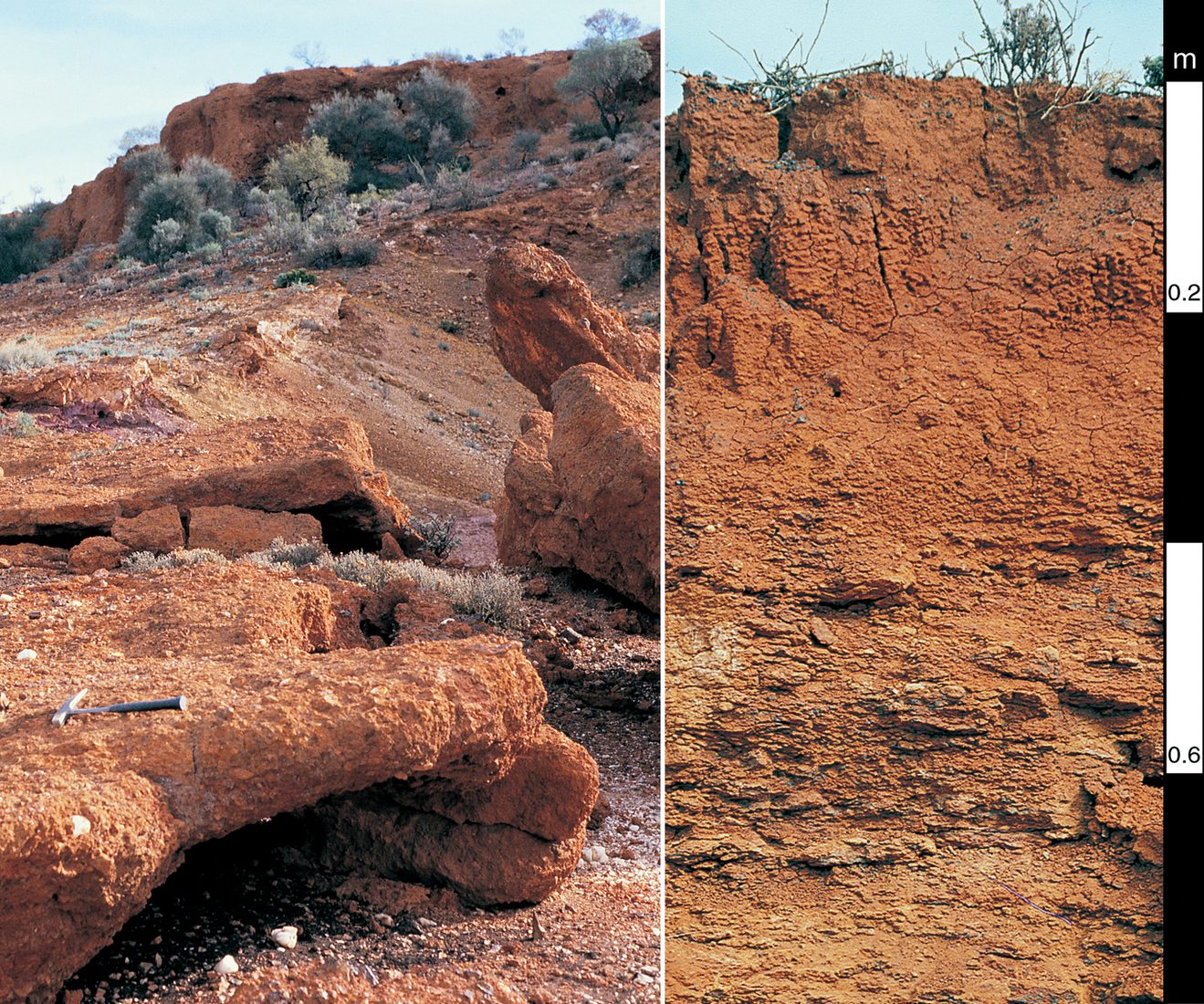
If you have already learned how to read an Australian soil profile, you are halfway to not being fooled. Carbon lives in horizons. On a Sodosol it may sit in a thin A horizon above a hostile clay. On a Vertosol it can be mixed deeper by shrink–swell. On a pale Tenosol west of Coober Pedy there may be almost nothing to mix. A claim that ignores the profile is a claim about a brochure.
What the carbon actually is
Soil organic carbon is the carbon atoms in that material. Soil organic matter is the material itself, of which carbon is roughly half. People slide between the two as if they were the same number. A laboratory report that says 1.2 per cent organic carbon is not saying the paddock is 1.2 per cent "humus", and it is not saying you have sequestered 1.2 per cent of anything.
The stock that matters is tonnes of carbon per hectare to a stated depth, usually 0–30 centimetres in Australian farm work. You need concentration and bulk density. Miss the density and you can "increase" carbon by compacting the soil, or "lose" it by loosening a bed. Equivalent soil mass — comparing the same weight of mineral soil, not just the same depth — is how serious sampling avoids that trick. A single bag from the fence line is not a baseline.
Most Australian agricultural soils sit between about 0.5 and 2.5 per cent organic carbon in the topsoil, with wetter coastal and tableland country running higher and the rangelands running lean. That range is not a moral score. A Mallee Calcarosol and an Atherton Ferrosol started in different rooms of the same house.
The useful question is not "how do I get to four per cent?" It is "what can this profile hold, and what will a dry year take back?"
Carbon in soil is not permanent in the everyday sense. Microbes eat it. A hot, wet fortnight after a dry winter can breathe out a decade of careful stubble. A drought that kills roots stops the input. This is not an argument against looking after organic matter. It is an argument against treating a good season as a permanent credit.
Measurement versus marketing
A proper measurement looks like work. You stratify the paddock — flats, rises, old sheep camps, the strip along the creek. You take enough cores that one crabhole does not write the story. You record bulk density. You send samples to a laboratory that uses dry combustion, not a colour chart from a field day. You repeat the exercise after a stated interval, in a similar season if you can, because a January sample and a July sample are not twins.
Marketing looks like a percentage with no depth, no density, no laboratory, and a photograph of greener grass. Greener grass is not a carbon stock. It may be nitrogen, a storm, or a year that was not 2019.
The one-per-cent claim is the most common fiction. Sometimes it means a relative change — 1.00 per cent becoming 1.01 per cent — which is smaller than the error on many sampling jobs. Sometimes it means a percentage point — 1.0 becoming 2.0 — which, at a bulk density of 1.3 grams per cubic centimetre in the top 30 centimetres, is in the order of forty tonnes of carbon per hectare. Australian field trials, including CSIRO and Grains Research and Development Corporation work across the wheat belt, do not generally hand out forty tonnes because someone planted a radish. A third version ignores bulk density and compares two contractors in two different years.
If a consultant cannot tell you which of those three they mean, you do not have a result. You have a slogan. Handheld sensors and satellite greenness can watch a season. They are not a stock measurement when money or a public claim is attached. The Clean Energy Regulator does not issue Australian Carbon Credit Units because a drone liked the colour of a paddock.
Australian Carbon Credit Units, with the caveats attached
The ACCU scheme — the descendant of the Emissions Reduction Fund — includes soil-carbon methods. They have been rewritten more than once, which is a sign of difficulty, not conspiracy. A project typically needs a baseline, a carbon estimation area, a sampling design the method will accept, and a permanence period of twenty-five or one hundred years. Additionality matters: you are not meant to be paid for what you were already doing, or for a change the climate made for you.
Those rules exist because soil carbon is reversible. A run of dry years, a return to bare fallow, a sale to someone who does not share the method — any of these can undo a gain. The scheme tries to price that risk. It cannot abolish it.
For a large pastoral company with good records, a soil-carbon project may be rational. For a mixed family farm on the Liverpool Plains or a grazing block in the New England, sampling and audit costs can eat the credit price before a tonne has moved. That is a reason to separate "we are looking after organic matter" from "we are generating offsets." A tonne sold as an ACCU is a tonne someone else is using to balance a ledger. It is not also a tonne for a supermarket story.
Pasture is not cropping, and neither is a miracle
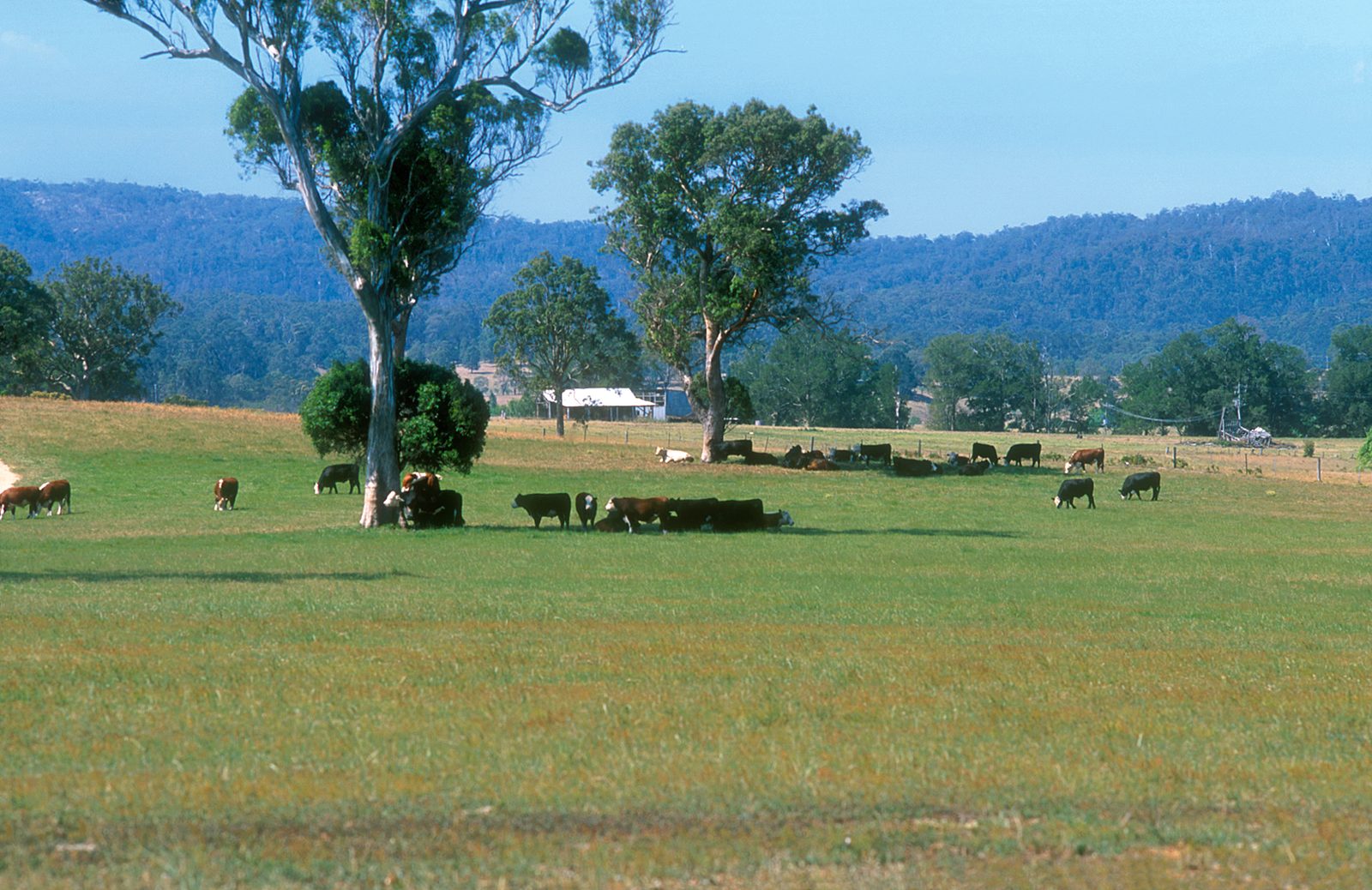
Pasture and cropping start from different carbon economies. A well-run perennial pasture — phalaris and sub-clover on the Southern Tablelands, buffel on a central Queensland run, a mixed sward in Gippsland — already keeps living roots in the ground for most of the year. The stock is often higher than on the neighbouring canola paddock before anyone mentions regeneration. Regenerative grazing in the rangelands can even out use and protect litter. It cannot invent a high-carbon soil in a 200-millimetre rainfall year.
Cropping country has a different job. Stubble retention, less aggressive tillage, and a sensible rotation protect what is already there. Cover crops for hot, dry seasons can add biomass when there is water to spare, and they can steal the spring moisture a wheat crop needed when there is not. The literature from CSIRO and the state departments is consistent: maintenance of stocks under Australian grain systems is a success; rapid, permanent doubling is a rumour.
A few places do accumulate carbon faster. Irrigation, high-rainfall dairying in southern Victoria and Tasmania, and some horticultural soils under mulch can look impressive in a short trial. They are not a template for a dryland Mallee block. Carbon that arrives with someone else's river is not a free gift from the paddock.
What a working farm can honestly do
Look after the stock you have. Keep ground cover. Return residues when the fire rules and the snails allow it. Fix the sodicity and acidity that stop roots exploring, because a root that cannot enter a B horizon cannot put carbon there. Measure if you are going to claim; observe if you are going to manage.
The Land will keep publishing the unfashionable version of this story, because the fashionable one keeps hurting people who believed a percentage. A farm can be a good farm with 1.1 per cent organic carbon. It can be a poor one with a certificate. The continent does not grade you on a single number, and neither should a buyer of grain, beef or hope.