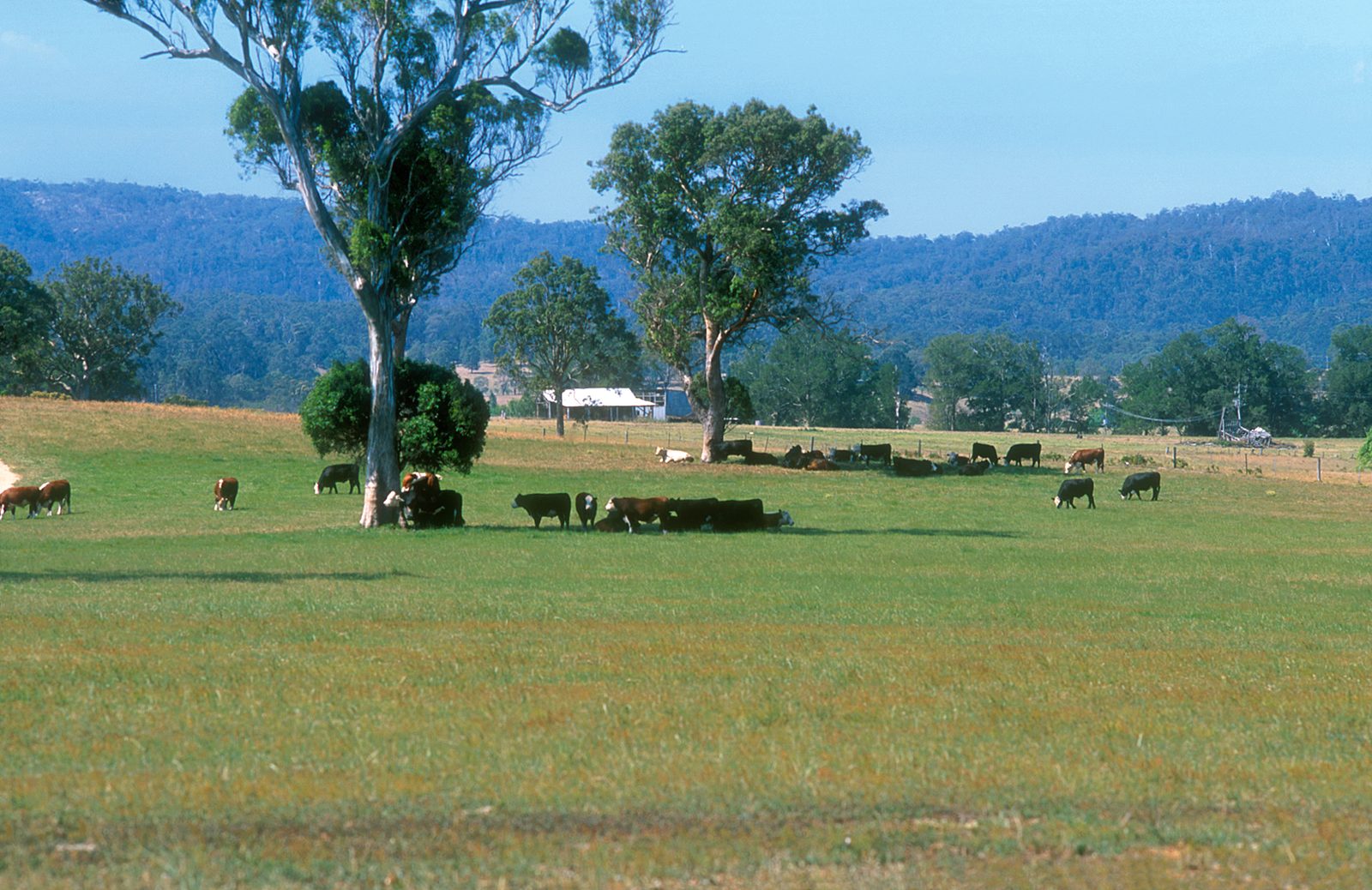
Australia is not one soil with a tan. It is a stack of old weather and old rock, and the stack changes between the gate and the creek. If you want to grow something, or talk honestly about soil carbon on working farms, you have to look at a face of dirt the way a stockman looks at a mob: not as a colour, but as a history.
A profile is that face — soil from the surface down to saprolite, alluvium, a hardpan, or the pale sand that has never quite become a garden. CSIRO's Australian Soil Classification names what you see. You do not need the full book in the paddock: a shovel, a notebook, a bottle of water, and the patience to stop treating the top ten centimetres as the whole story.
Three soils that refuse to be one country
Start with three names that turn up on farm plans and Landcare maps, and that refuse to behave like one another.
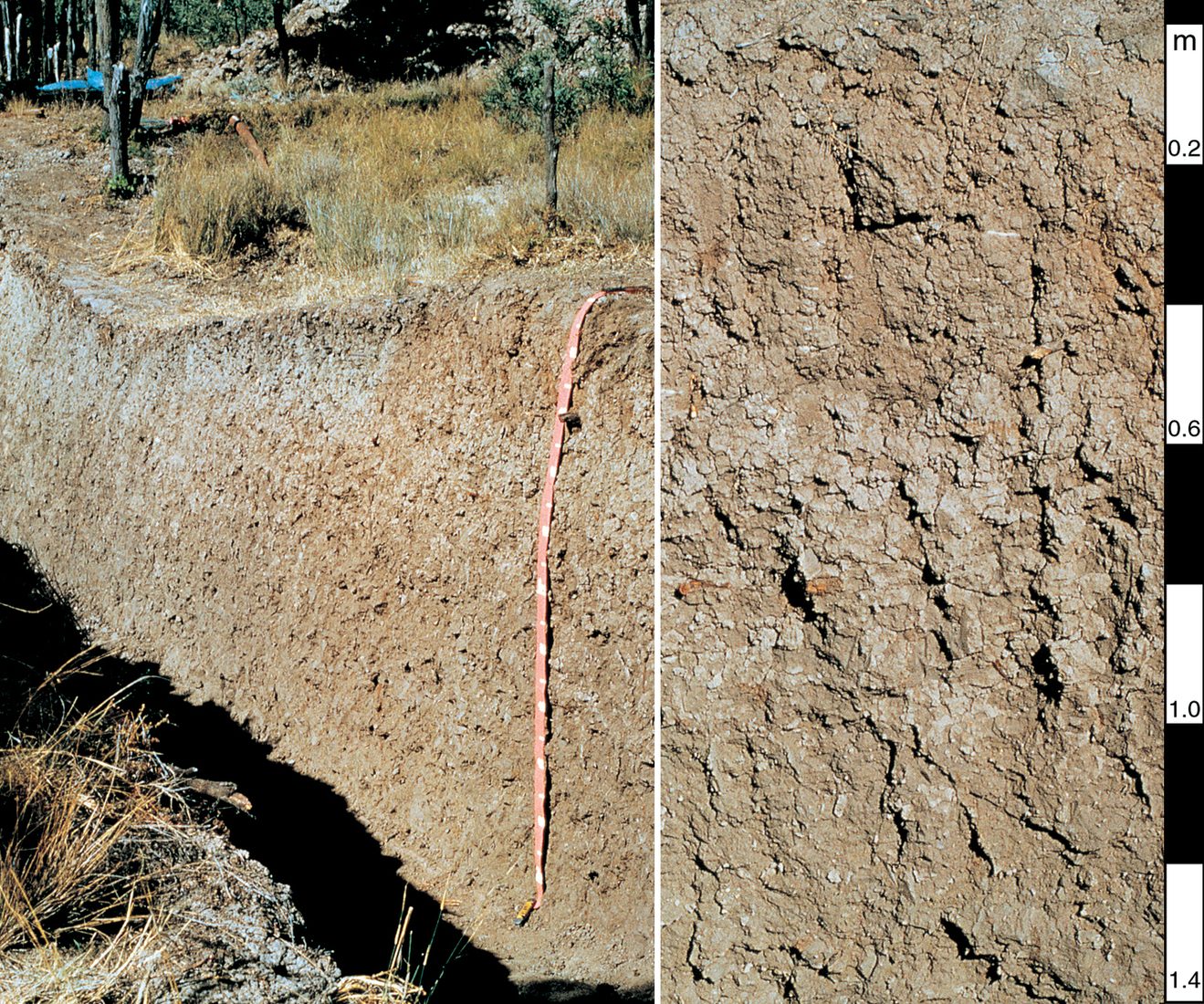
Vertosols are the cracking clays. On the Darling Downs, the Liverpool Plains, and parts of the Riverina and the Wimmera, they open in summer like a dry creek bed and close again when the storms come. They hold the water that has made wheat and sorghum fortunes, and they swallow fence posts. A grey Vertosol in the Chinchilla district can run more than a metre deep before you meet something that is not clay.
Sodosols punish a plough. A sandy or loamy A horizon sits on a sodic clay — too much exchangeable sodium, not enough structure. When wet it disperses; when dry it sets. You see them on the Western Slopes, the Victorian Wimmera and Mallee, the South Australian wheat country, and the Western Australian wheatbelt. A red Sodosol near Coober Pedy looks nothing like a Downs clay, but a wet crumb in the palm will still tell you whether the subsoil will melt.
Ferrosols are the red volcanic soils gardeners write home about. On the Atherton Tableland, around Kingaroy, on the basalt of the Northern Rivers, and in pockets of western Victoria, they are deep, well structured, and hungry for phosphorus because iron and aluminium oxides lock it up. They drain when a Vertosol will not, and they erode when the grass comes off.
These three do not exhaust the continent. Kandosols, Chromosols, Calcarosols and the pale Tenosols of the deserts take more country than all the cracking clays combined. If you can tell a Vertosol from a Sodosol from a Ferrosol, you have left the idea that soil is brown dirt.
Dig a pit, or borrow a cutting
A proper pit is a hole you can stand beside: a metre square, often eighty centimetres to 1.2 metres deep. Check Dial Before You Dig. Keep topsoil and subsoil in separate heaps. Do not dig alone in cracking clay after rain.
Most of us borrow a profile. A roadside cutting on the New England Highway, a dam bank west of Dubbo, an eroded gully in a Landcare catchment. The face has weathered. It is still better than guessing from the lawn.
A profile is not a sample bag. It is a sequence. If you only keep the topsoil, you have a colour, not a diagnosis.
Work from the top. Mark horizons with a knife: A1, A2 if there is a bleach, then B, then whatever sits under that. In Australian soils the A2 — the pale layer above a clay — is often the sentence that matters. It tells you water has been moving, and that the clay below may be the bottleneck. Photograph the face with a tape for scale, then get your hands in it.
Colour, structure, and the feel of a handful
Colour is the first lie and the first clue. Dark is not always carbon. A Vertosol is dark because of clay and iron as much as organic matter; a Ferrosol is red because of haematite, not fertility; a pale A2 is pale because iron has left. Use moist colour. Dry Australian soil, especially in January, is a bleached version of itself.
Structure is how the soil breaks — crumbs, angular blocks, plates, or a massive, featureless mass. Crumb at the surface is what you want under pasture. Columnar structure in a sodic B horizon is a warning: water will sit, roots will stop, and a first-year cover crop will look heroic until November.
Feel a handful. Sand grits, silt is silky, clay smears. A moist ribbon longer than five centimetres is a clay; a ribbon that barely holds is a loam or a sand. On the Swan Coastal Plain you will be lucky to make a worm. On a Downs Vertosol you can make a snake. Note roots, carbonate nodules, and the slickensides that mark a true cracking clay. A sour smell in a suburban yard is waterlogging, not richness.
pH, sodicity, and the chemistry you cannot see
A field pH kit from a rural supplier is enough for a first pass. Australian agricultural soils run from the acid Kandosols of the high-rainfall coast to the alkaline Calcarosols of the Eyre Peninsula and the Wimmera.
pH in water and pH in calcium chloride are not the same number. NSW DPI, Agriculture Victoria, DPIRD in Western Australia and Queensland DAF usually report calcium chloride. If a brochure gives you a single pH without the method, treat it as a colour, not a measurement.
Sodicity is the quiet wrecker. Exchangeable sodium above about six per cent in a clay is where structure starts to fail; above fifteen the clay disperses like instant coffee. Drop a dry aggregate in rainwater — the Emerson test. If the edges cloud and the crumb slumps, you have a dispersion problem. Gypsum can help some Sodosols. It will not turn a sand into a clay.
Salinity often travels with sodicity on the Riverine Plains and in the WA wheatbelt. A cheap conductivity meter on a 1:5 mix will tell you if salt is already in the root zone. None of this is a reason to buy a drum of microbes. It is a reason to stop treating every hectare as a uniform brown.
Why the Darling Downs is not the Swan Coastal Plain
A cracking clay near Dalby can store two hundred millimetres of plant-available water in a good profile. A Bassendean sand on the Swan Coastal Plain may store thirty, and it will lose nitrogen and phosphorus as if the paddock were a sieve. The Downs clay will grow sorghum on stored water through a dry spring. The Perth sand needs organic matter, frequent small watering, and humility about fertiliser.
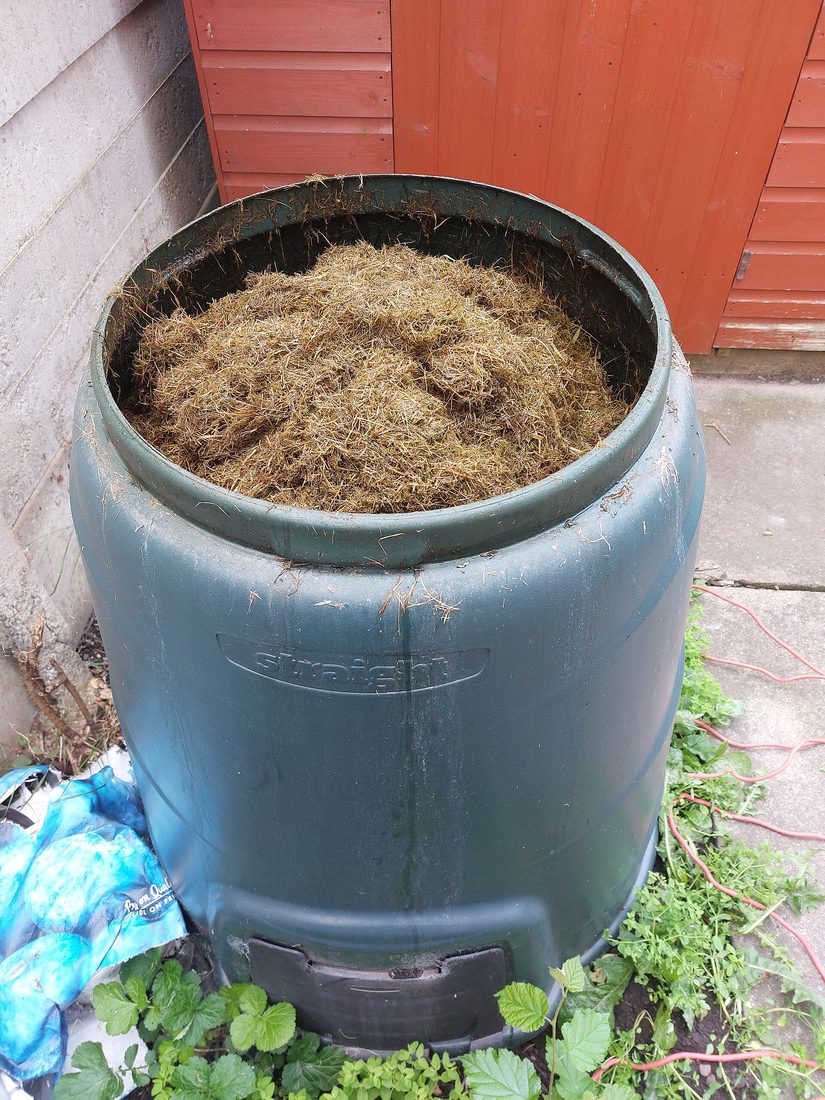
You cannot compost your way from one to the other. Compost that works in Australian suburbs changes the topsoil of a sandy yard. It does not manufacture a B horizon. A Melbourne basalt clay in a Brunswick backyard will not become a free-draining garden because you added sand. You will get concrete.
This is why The Land keeps returning to profiles. Carbon claims, grazing rest and suburban food gardens fail in the same way when they ignore the soil they are standing on. A method that sequesters carbon in a high-rainfall Ferrosol will not necessarily do so in a sodic duplex that sets like a cricket pitch.
CSIRO's Australian Soil Resource Information System, Queensland's land resource surveys, NSW eSPADE, Agriculture Victoria and Western Australia's soil-landscape mapping will give you a name before you leave the house. The pit, or the cutting, will tell you whether the name is true on your side of the creek.
What to write down before you leave
Leave with a page, not a vibe.
- Location, date, and whether the soil was dry, moist or wet. Summer faces lie.
- Horizon depths, moist colours, and structure.
- Texture of each horizon, and whether an A2 is bleached.
- Field pH, a dispersion note, and any carbonate or mottling.
- What is growing, what is not, and where the water sits after rain.
Then fill the pit. A profile that stays open is a hazard. If you are in a Landcare group, share the notes. The catchment already has enough opinions.
The country will not become one soil because we wish it. The useful work is to read the one you have.