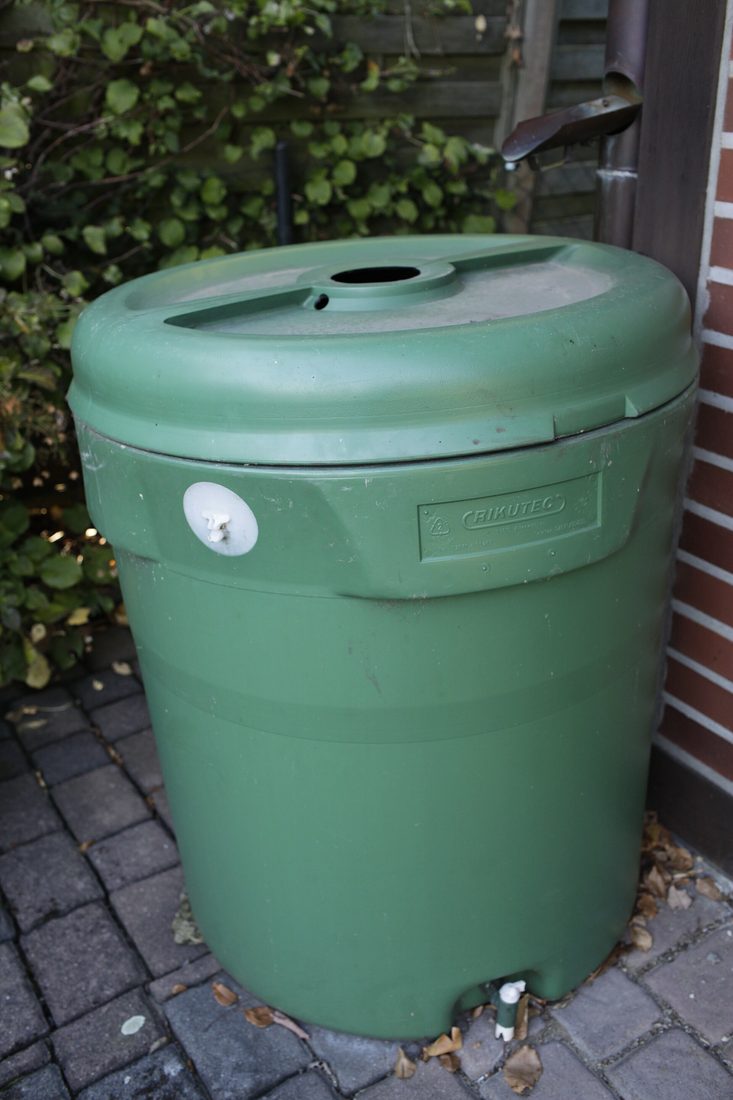
A rainwater tank is one of the few climate appliances that still looks like itself. People buy them after a restriction summer, or because a new-house code said so, or because a grandparent in the Adelaide Hills never trusted the mains. Then the plumber leaves and the household develops a vague faith that the sky is now organised.
Faith is not a maintenance plan. A tank is a small catchment on your block. It has a roof, a first flush of dirty water, a dark interior, a mosquito question, a pump that will fail on the hottest Saturday, and rules that change at the state border. Done properly, it takes pressure off scheme water. Done as a gesture, it breeds larvae and quietly connects to a tap nobody quite remembers.
First flush and the roof you actually have
Start with volume. A 2,000-litre slimline tank on a terrace will empty in a week of serious watering. A 10,000-litre tank under a decent roof, in a city that still gets a proper winter, can carry a vegetable patch through a dry January if you are not keeping a bowling-green lawn. Match the tank to the roof and to the job.
Placement is the next unromantic decision. Tanks on the western wall cook. Shade, a southern side, a buried tank if the soil allows: these are comfort choices for the water. A tank needs a firm base and an overflow that goes somewhere intended — stormwater, a raingarden, a gravel trench — not under the house stumps.
If the garden is the reason you are doing this, read it beside drought-ready gardens that still look like a garden. A tank without a planting plan becomes a novelty.
The first millimetres of rain do not rinse the sky. They rinse the roof. Dust, rubber, leaf tannin, bird droppings: all of it sits on the corrugations waiting for a storm. A first-flush diverter is a chamber that fills before clean water is allowed into the tank. After the rain, you empty it, or a slow drip empties it for you. Skip this and you are collecting a concentrated tea of the suburb.
Roof materials matter more than tank brands. Modern steel roofing in decent condition is the usual Australian workhorse. Glazed tiles shed well if the gutters are not a compost heap. Old lead flashings around chimneys can leach into the first water; if the house is of that age, know where the lead is. Asbestos-cement roofs on older outbuildings are a contamination problem, not a charm. If you cannot name the roof, you do not yet have a drinking supply. You have a garden supply with a story attached. Gutters are part of the roof: leaf guards help and do not replace a ladder, and overflow outlets need screening as much as inlets do.
Mesh, mosquitoes, pumps and the last metre
Mosquitoes do not need a lake. They need a dark, still saucer and a way in. A tank with torn mesh, an unscreened overflow, or a first-flush chamber that holds water like a vase is a suburban wetland with branding. In parts of Australia that already live with Aedes, this is a public-health courtesy to the street.
Fit and inspect mesh on every opening that sees air. Keep the overflow screened even if it only runs twice a year. Do not let overflow puddle under the tank for a week. If you can hear mosquitoes when you open the inspection cap, the system has already failed a basic test. The tank is not the only offender; empty pot-plant saucers while you are there.
Gravity will water a downhill bed. It will not run a modern washing machine with any grace. Most household tanks end in a pump: an external pressure pump on a slab, or a submersible sitting in the water. The pump wants a dry, ventilated cover and a check valve so it does not lose its prime and sulk.
Think about the last metre. A cheap timer on a drip line is more valuable than a decorative tap. A filter before the pump saves the impeller from grit. A mains backup, installed by a licensed plumber with the right backflow prevention, stops the household discovering on a forty-degree day that the tank is empty and the pump is chewing air. Rainwater must not be able to push into the drinking mains. The device that prevents that is not optional decoration.
A pump on a heatwave Saturday is competing with every air-conditioner in the street. The same summer that empties a tank is the summer that stresses a house. We have a longer conversation about that air in indoor air quality in Australian homes.
Drinking, garden, and the rules that change at the border
Australian plumbing is national in tone and state in detail. The Plumbing Code of Australia and AS/NZS 3500 set the grammar. States write the local accent, and councils add another. In New South Wales, BASIX has pushed many new houses toward a tank plumbed to toilets and laundry. In Victoria, indoor connection wants a licensed plumber and backflow prevention. South Australia has a long cultural memory of drinking tank water; that memory is not a licence to ignore a lead valley. Queensland households, especially outside the big schemes, often treat tanks as ordinary. Tasmania and the inland towns never really stopped.
The practical split is this. Garden use is the easy win: a dedicated tap, a pump, a drip line, no connection to the mains except through a legal backup. Indoor non-drinking use — toilet, laundry — is the middle path, and the one most urban codes are comfortable with when the work is licensed. Drinking is a household decision that sits under health-department guidance, not a hardware-store label. Urban roofs are dirty in ways a paddock roof is not. If you drink tank water in a city, you are accepting first-flush, closed screens, periodic cleaning, and the humility to stop when the gutters are a rookery.
Clauses move. A licensed plumber in your state, and the water authority's rainwater page, are the living documents. Do not invent a cross-connection because a neighbour did it in 1998, and do not call tank water “pure” because it came from the sky. The sky over a ring road is a catchment with traffic in it.
Legionella without the panic
Legionella is a genus of bacteria that can grow in warm, stagnant water. The illness associated with it is usually linked to breathing in aerosols — the fine mist from a poorly kept warm-water system, a spa, a fountain — not to drinking a glass of cold tank water. That distinction matters. Panic helps no one. Neither does the pretence that a black tank on a western wall in February is a mountain spring.
Keep the water as cool as the site allows. Shade the tank. Do not run neglected water through a fine mister or any device that turns the tank into a breathable cloud. If a line has sat unused in the heat, flush it onto the garden before you invent a spray. People who are older, or whose immune systems are already under other pressures, should be especially unsentimental about aerosols from forgotten warm water. That is caution, not a diagnosis, and it is not a reason to rip out a well-kept tank. A soaker hose is a different risk from a decorative mist over a patio.
After the first autumn break, empty and check the first-flush. Before summer, walk the mesh, the overflow and the pump cover. Once a year, inspect the interior or have someone who does this for a living do it; sludge is not a personality. After a bushfire or a dust storm, treat the next tankful as dirty until the roof and gutters have been cleaned.
The overflow that reaches a street gutter is now stormwater. If you can send it into a raingarden or a mulched bed instead, you have joined the tank to the street's hydrology. That wider habit is the subject of urban creeks and the stormwater we pretend is gone, and of the rest of The Water shelf.
A tank done properly is a quiet machine. It teaches a household the size of a roof and the difference between a gesture and a system.