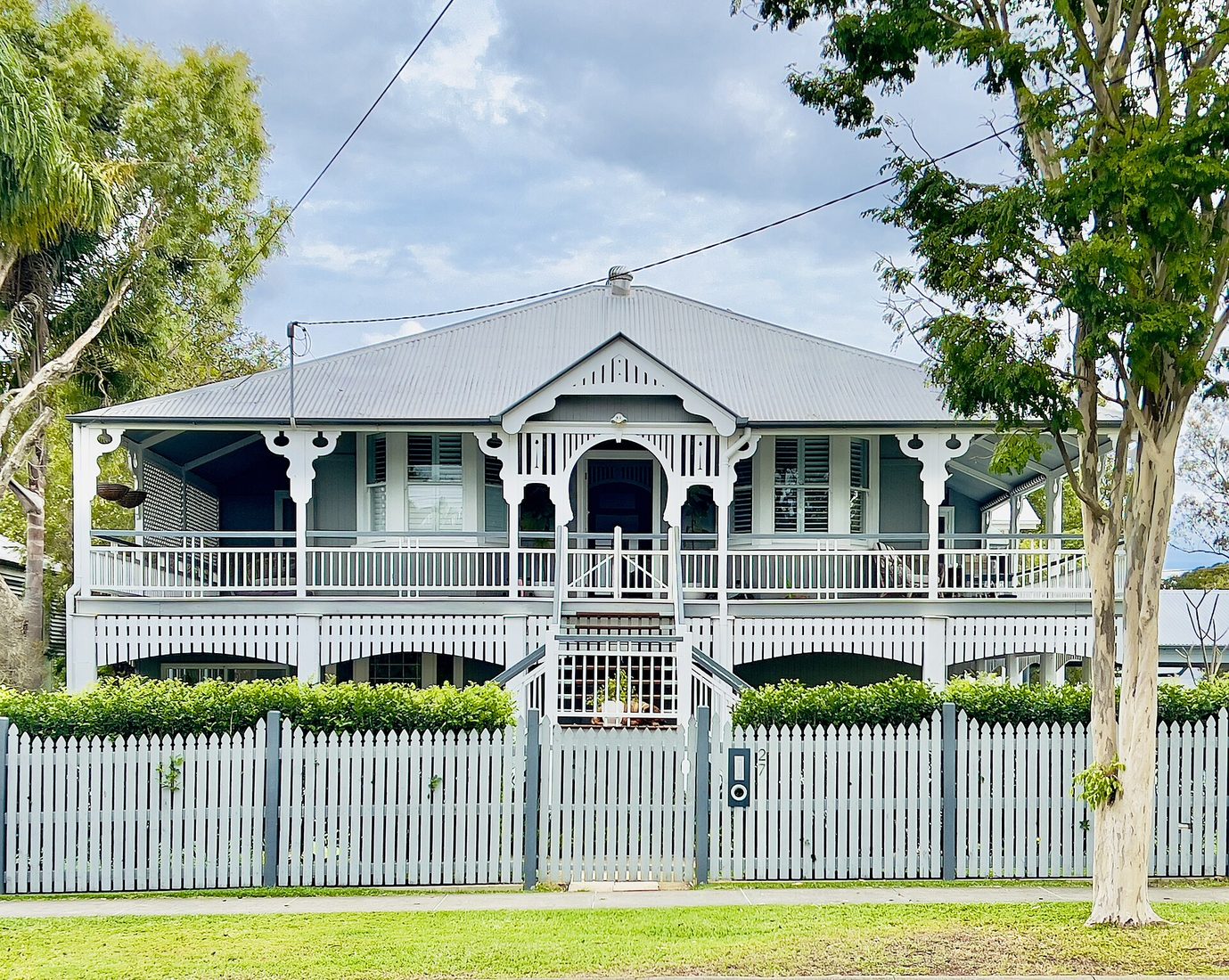
Australia is a young country with a lot of old paint. The houses people mean when they say “character” — the weatherboard in Marrickville, the Queenslander on stumps in Sherwood, the bungalow in a Melbourne side street, the fibro holiday box that became a home — were finished in materials that would not pass a hardware-store conversation now. Lead in the paint. Asbestos in the sheet. Both are usually quiet until someone with a sander decides the house should look like a magazine.
This is not medical advice. It is a practical note on how those materials behave in an Australian house, and how a keen weekend becomes a dust problem. Advice about a particular child, a pregnancy or a diagnosis is a clinician’s, not a journal’s. The house still needs a method.
It sits in The House because this is where most of us actually meet the last century: not in a tribunal, but in a hallway we meant to brighten.
Pre-1970 paint, and the dust you cannot see settling
Lead was useful in paint. It made colour last and weatherboard shrug off a southerly. It was also a poison we were slow to retire. In Australia, lead in domestic paint was wound down through the twentieth century and more tightly limited from the 1970s onward; the houses that still hold the old film are ordinary. If your place was built or last thoroughly painted before about 1970, assume lead until a test says otherwise. Many later renovations sat new paint on old paint and called it a job.
Lead is a problem when it becomes dust and when that dust is eaten or breathed. Children, who live nearer the floor and who put hands in mouths, are the reason the public-health literature is blunt. Pets are not a rounding error. A household that sanded a hallway “just to get it back to wood” can distribute a fine, sweet-looking dust into carpets, window tracks and the garden bed against the wall.
The garden matters. Soil along the drip line of an old painted house is a classic reservoir. If you grow food there, read it as a soil fact, not as a rustic charm. Growing food in Australian backyards is where that bed is discussed as lunch. Here it is enough to say: do not scrape a window sash onto the silverbeet and then wash the leaves as if water were an absolution.
Testing paint is not exotic. A result that says “lead” does not mean the house is unliveable. It means the next step is a method, not a sander from the back of the ute.
What a careful household does with old paint
Leave intact, well-adhered paint alone if you can. A sound film is a lid. If you need to clean it, use water and a cloth, not a dry sand. If you need to paint over it, prepare gently, contain the waste, and do not grind it into the street. If you need to remove it — because it is flaking into a cot room, because the heritage colour is a lie you cannot live with — hire people who treat lead as lead.
The work that goes wrong is almost always DIY with the wrong tool. Heat guns that puff fumes. Angle grinders on a verandah post. Dry sanding on a still morning because the weather was “perfect for it”. A skip that then sits open beside a sandpit. Neighbours did not consent to your project. Neither did the lungs of the person who will vacuum next week.
Wet methods, plastic, a vacuum that is actually rated for fine dust, work clothes that do not travel to the couch, and a waste bag that is not the garden bin: these are the unromantic kit. If that sounds like too much for a Saturday, that is information. It means the job is larger than a Saturday.
Indoor dust is the medium. A damp clean after any disturbance is part of the job. The broader habit of treating indoor air as a room with a history lives in indoor air quality in Australian homes. Lead is one of the older passengers.
Fibro, asbestos, and the sheet that looks like a house
Asbestos was our national cladding for a generation. Fibro — cement sheet with asbestos in it — is in eaves, gables, fences, bathroom walls, old vinyl, the underlay you meet when you lift a kitchen. It is in Queenslanders and in the plainest Housing Commission box. It is the ceiling of a lot of laundries.
Intact, painted, undisturbed fibro is a different object from fibro that is being cut, drilled or left to crumble into a dry wind. The fibre is the hazard, and it becomes available when the sheet is abused. A house that contains asbestos is, in Australia, a common house. A house being renovated without a plan is a workplace that has not admitted it is a workplace.
You cannot reliably tell by eye. Paint hides everything. Some later sheets are “asbestos-free” and look the same. If the building is of the age, treat suspect material as asbestos until a licensed assessor samples it. The waiting is irritating. The alternative is a weekend that cannot be un-swept.
DIY is how the quiet thing becomes a dust
Hardware stores will sell you a blade that will go through a fibro eave in a minute. Licensed removal exists because the work is easy to do badly and hard to undo. In every state and territory the rules draw a line between a tiny job a homeowner might do with strict controls and the work that must be licensed. The line is not a vibe.
Queenslanders deserve their own paragraph because people love them, and love is a renovation accelerant. Lifting a house, replacing stumps, swapping an eave, opening a verandah closed in 1962: these are classic fibro and lead intersections. The timber is beautiful. The dust is not. Budget for assessment the way you budget for a stump. If the quote ruins the romance, the romance was underpriced.
The house is allowed to be old. The renovation is not allowed to pretend the twentieth century was only a style.
Tenants are in a harder spot. You cannot commission a full strip-out. You can refuse to sand a peeling sill into a child’s room, ask in writing what the owner knows, and take a crumbling-eave problem to a tenants’ service rather than to a weekend of sandpaper. None of that is fair. It is still the available kit.
Licensed removal, and the boredom that keeps people safe
A licensed job looks slow from the footpath. Plastic, signs, a bag you are not invited to lean on, a clearance that is a piece of paper. That boredom is the point. Unlicensed work looks like progress. It is how a suburb redistributes a fibre it had agreed to leave asleep.
Disposal is part of the job. Asbestos waste has designated places. It does not have your trailer at the ordinary tip, and it does not have the nature strip on council clean-up day. If a contractor is vague about where the bags go, that is not a bargain.
After the truck leaves, the house is not “clean” by atmosphere. It is clean if the surfaces were cleaned and the garden bed under the scaffold is not now a souvenir. Then paint, if paint is the lid you need.
Living with what you do not remove
Most households will not strip a house to the bone. They will live with a painted eave, a sound fibro fence, a hallway last done in 1998 over something older. That can be a reasonable life. Keep coatings intact. Do not drill a suspect sheet if you have another wall. Fix water first; water is how a quiet sheet becomes a damaged sheet. When you sell or rent, disclosure is not only manners.
A character house is a privilege and a maintenance schedule. Lead and asbestos are not a moral failing of the people who bought the weatherboard. They are a fact of the century that built it. The work is to stop turning that fact into dust because a feed told you the timber would look better bare. The timber can wait. The lungs do not get a second renovation.